Licoride ile kim çıktı?
Marcus Junius Brutus Licoride tarihli ? ile ?. arasında
Mark Antony Licoride tarihli ? ile ?. arasında
Gaius Cornelius Gallus Licoride tarihli ? ile ?. arasında
Licoride
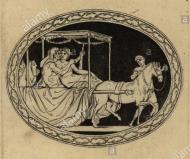
Volumnia Citeris (fl. siglo I a. C.) fue una antigua actriz y bailarina de mima romana. Se le conoce particularmente como la amante de varios romanos famosos.
Nacida posiblemente alrededor del 70 a. C., Citeris fue originalmente una esclava de Publio Volumnio Eutrapelio pero luego se hizo liberta. Sobre los escenarios, normalmente era llamada Citeris. El nombre deriva de «Cythera», un apelativo de Afrodita. Citeris al parecer sostuvo relaciones con Bruto y con Marco Antonio (que puso fin a la relación hacia el 48 a. C. para casarse con Fulvia), que le atrajeron mucha atención en la antigua Roma de su tiempo. Se la menciona como acompañante de sus amantes aristocráticosen ocasiones sociales en las que la presencia de una cortesana no era común y su presencia fue considerada escandalosa.
Al parecer, la esposa de Cicerón le pidió en algún punto a Citeris que la ayudara a reparar la relación entre su esposo y el amante de Citeris, Marco Antonio.
El rechazo de Citeris a Cayo Cornelio Galo supuestamente sirvió como tema de la décima Égloga de Virgilio. Galo se refiere a ella en su obra bajo el nombre de Lycoris, en alusión a uno de los nombres «Lycoreus» del dios griego de la música, Apolo.
Citeris una de las pocas cortesanas romanas influyentes y libres que es mencionada por sus contemporáneos, junto con Precia y Kelidon. Se desconoce el destino de Citeris y no es mencionada en fuente alguna después de cierto tiempo.
Devamını oku...Marcus Junius Brutus

Marcus Junius Brutus (; Latin: [ˈmaːrkʊs juːniʊs ˈbruːtʊs]; c. 85 BC – 23 October 42 BC) was a Roman politician, orator, and the most famous of the assassins of Julius Caesar. After being adopted by a relative, he used the name Quintus Servilius Caepio Brutus, which was retained as his legal name. He is often referred to simply as Brutus.
Early in his political career, Brutus opposed Pompey, who was responsible for Brutus' father's death. He also was close to Caesar. However, Caesar's attempts to evade accountability in the law courts put him at greater odds with his opponents in the Roman elite and the senate. Brutus eventually came to oppose Caesar and sided with Pompey against Caesar's forces during the ensuing civil war (49–45 BC). Pompey was defeated at the Battle of Pharsalus in 48, after which Brutus surrendered to Caesar, who granted him amnesty.
With Caesar's increasingly monarchical and autocratic behaviour after the civil war, several senators who later called themselves liberatores (liberators) plotted to assassinate him. Brutus took a leading role in the assassination, which was carried out successfully on the Ides of March (15 March) of 44 BC. In a settlement between the liberatores and the Caesarians, an amnesty was granted to the assassins while Caesar's acts were upheld for two years.
Popular unrest forced Brutus and his brother-in-law, fellow assassin Gaius Cassius Longinus, to leave Rome in April 44. After a complex political realignment, Octavian – Caesar's adopted son – made himself consul and, with his colleague, passed a law retroactively making Brutus and the other conspirators murderers. This led to a second civil war, in which Mark Antony and Octavian fought the liberatores led by Brutus and Cassius. The Caesarians decisively defeated the outnumbered armies of Brutus and Cassius at the two battles at Philippi in October 42. After the defeat, Brutus took his own life.
His name has become a synonym and byword for "betrayal" or "traitor" in most languages of Europe. His condemnation for betrayal of Caesar, his friend and benefactor, is perhaps rivalled only by the name of Judas Iscariot, with whom he is portrayed in Dante Alighieri's Inferno. He also has been praised in various narratives, both ancient and modern, as a virtuous and committed republican who fought – however futilely – for freedom and against tyranny.
Devamını oku...Licoride
Mark Antony

Marcus Antonius (14 Ocak MÖ 83 - 1 Ağustos MÖ 30), İngilizce bilinen adıyla Mark Antonius, Roma Cumhuriyeti'nin anayasal bir cumhuriyetten otokratik Roma İmparatorluğu'na dönüşmesinde kritik bir rol oynayan Romalı siyasetçi ve generaldi.
Antonius, Jül Sezar'ın akrabası ve destekçisiydi ve Galya'nın fethi ve Sezar'ın iç savaşı sırasında onun generallerinden biri olarak görev yaptı. Sezar, Yunanistan, Kuzey Afrika ve İspanya'daki siyasi rakiplerini ortadan kaldırırken Antonius İtalya'nın yöneticisi olarak atandı. MÖ 44 yılında Sezar'ın öldürülmesinden sonra Antonius, Sezar'ın generallerinden bir diğeri olan Lepidus ve Sezar'ın büyük yeğeni ve evlatlık oğlu Octavian ile güçlerini birleştirerek tarihçiler tarafından İkinci Triumvirlik olarak bilinen üç kişilik bir diktatörlük kurdu. Triumvirler, Sezar'ın katilleri Liberatores'i MÖ 42'de Filippi Savaşı'nda yendi ve Cumhuriyet'in yönetimini kendi aralarında paylaştı. Antonius'a, o zamanlar VII. Kleopatra tarafından yönetilen Mısır'ın müşteri krallığı da dâhil olmak üzere Roma'nın doğu eyaletleri verildi ve Roma'nın Partlara karşı savaşını yönetti.
Triumvirler arasındaki ilişkiler, çeşitli üyelerin daha fazla siyasi güç arayışına girmesiyle gerildi. Antonius ve Octavian arasındaki iç savaş, MÖ 40 yılında Antonius'un Octavian'ın kız kardeşi Octavia ile evlenmesiyle önlendi. Bu evliliğe rağmen Antonius, kendisine üç çocuk doğuran Kleopatra ile aşk yaşamaya devam etti ve bu durum Antonius'un Octavian ile ilişkilerini daha da gerginleştirdi. Lepidus, MÖ 36'da birlikten ihraç edildi ve MÖ 33'te Antonius ve Octavian arasındaki anlaşmazlıklar kalan Triumvirler arasında bir bölünmeye neden oldu. Devam eden düşmanlıkları MÖ 31'de Octavianus'un cumhuriyeti Kleopatra'ya savaş ilan etmeye ve Antonius'u hain ilan etmeye teşvik etmesiyle iç savaşa dönüştü. Aynı yılın ilerleyen günlerinde Antonius, Octavian'ın kuvvetleri tarafından Aktium Savaşı'nda yenilgiye uğratıldı. Antonius ve Kleopatra Mısır'a kaçtı ve İskenderiye Savaşı'nda tekrar yenilgiye uğrayınca intihar ettiler.
Devamını oku...Licoride
Gaius Cornelius Gallus

Cayo Cornelio Galo (en latín, Gaius Cornelius Gallus; Forum Livii, actual Forlì, 70-26 a. C.) fue un poeta, político y militar romano, primer prefecto de Egipto —cargo augústeo equivalente al de procónsul de Egipto— de la historia romana.
Devamını oku...