Barbara Palmer, 1st Duchess of Cleveland ile kim çıktı?
John Churchill, 1st Duke of Marlborough Barbara Palmer, 1st Duchess of Cleveland tarihli ? ile ?. arasında Aralarındaki yaş farkı 9 yıl 6 ay 9 gün.
II. Charles Barbara Palmer, 1st Duchess of Cleveland tarihli ile . arasında Aralarındaki yaş farkı 10 yıl 5 ay 19 gün.
Barbara Palmer, 1st Duchess of Cleveland
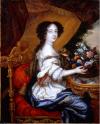
Barbara Palmer, 1st Duchess of Cleveland, Countess of Castlemaine (née Barbara Villiers VIL-ərz; 27 November [O.S. 17 November] 1640 – 9 October 1709), was an English royal mistress of the Villiers family and perhaps the most notorious of the many mistresses of King Charles II of England, by whom she had five children, all of them acknowledged and subsequently ennobled. Barbara was the subject of many portraits, in particular by court painter Sir Peter Lely.
Barbara's first cousin, Elizabeth Villiers (later 1st Countess of Orkney 1657–1733), was the presumed mistress of King William III. King William was the King of England, Scotland, and Ireland from 1689 to 1702.
Devamını oku...John Churchill, 1st Duke of Marlborough
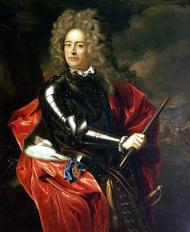
John Churchill, I duque de Marlborough, I príncipe de Mindelheim, I conde de Nellenburg y príncipe del Sacro Imperio Romano Germánico (Devonshire, Inglaterra, 26 de mayo de 1650-Windsor Lodge, 16 de junio de 1722) fue un militar, estadista y político inglés cuya carrera abarcó el reinado de cinco monarcas ingleses, entre mediados del siglo XVII y principios del siglo XVIII. Fue uno de los más grandes generales de Inglaterra, liderando a los ejércitos británicos y aliados hacia importantes victorias sobre Luis XIV de Francia, durante la guerra de sucesión española, particularmente en Höchstädt (1704), Ramillies (1706) y Oudenaarde (1708).
Estas victorias consolidaron el surgimiento de Gran Bretaña como potencia de primera línea, mientras que su capacidad para mantener la unidad en la conflictiva coalición demostró sus habilidades diplomáticas. Los historiadores militares lo recuerdan a menudo tanto por sus habilidades organizativas y logísticas como por sus habilidades tácticas. Sin embargo, también fue fundamental para alejarse de la estrategia de guerra de asedio que había dominando la guerra de los Nueve Años. Churchill se ganó una reputación en Europa que no tuvo rival hasta el ascenso de Napoleón.
La célebre canción popular Mambrú se fue a la guerra procede de una deformación de la fonética de su título ducal. Fue antepasado del ex primer ministro británico Winston Churchill.
Devamını oku...Barbara Palmer, 1st Duchess of Cleveland
II. Charles

Charles II (29 May 1630 – 6 February 1685) was King of Scotland from 1649 until 1651 and King of England, Scotland, and Ireland from the 1660 Restoration of the monarchy until his death in 1685.
Charles II was the eldest surviving child of Charles I of England, Scotland and Ireland and Henrietta Maria of France. After Charles I's execution at Whitehall on 30 January 1649, at the climax of the English Civil War, the Parliament of Scotland proclaimed Charles II king on 5 February 1649. However, England entered the period known as the English Interregnum or the English Commonwealth with a republican government eventually led by Oliver Cromwell. Cromwell defeated Charles II at the Battle of Worcester on 3 September 1651, and Charles fled to mainland Europe. Cromwell became Lord Protector of England, Scotland and Ireland. Charles spent the next nine years in exile in France, the Dutch Republic and the Spanish Netherlands. A political crisis after Cromwell's death in 1658 resulted in the restoration of the monarchy in 1660, and Charles was invited to return to Britain. On 29 May 1660, his 30th birthday, he was received in London to public acclaim.
Charles's English Parliament enacted the Clarendon Code, to shore up the position of the re-established Church of England. Charles acquiesced to these new laws even though he favoured a policy of religious tolerance. The major foreign policy issue of his early reign was the Second Anglo-Dutch War. In 1670, he entered into the Treaty of Dover, an alliance with his cousin, King Louis XIV of France. Louis agreed to aid him in the Third Anglo-Dutch War and pay him a pension, and Charles secretly promised to convert to Catholicism at an unspecified future date. Charles attempted to introduce religious freedom for Catholics and Protestant dissenters with his 1672 Royal Declaration of Indulgence, but the English Parliament forced him to withdraw it. In 1679, Titus Oates's fabrication of a supposed Popish Plot sparked the Exclusion Crisis when it was revealed that Charles's brother and heir presumptive, James, Duke of York, had become a Catholic. The crisis saw the birth of the pro-exclusion Whig and anti-exclusion Tory parties. Charles sided with the Tories and, after the discovery of the Rye House Plot to murder Charles and James in 1683, some Whig leaders were executed or forced into exile. Charles dissolved the English Parliament in 1681 and ruled alone until his death in 1685.
A patron of the arts and sciences, Charles became known for his affability and friendliness, and for allowing his subjects easy access to his person. But he also showed an almost impenetrable reserve, especially concerning his political agendas. His court gained a reputation for moral laxity. Charles's marriage to Catherine of Braganza produced no surviving children, but the king acknowledged at least 12 illegitimate children by various mistresses. He was succeeded by his brother James.
Devamını oku...